Password Protected
To view this protected post, enter the password below:
Escape Racism – February Project Update
Each of the Escape Racism partners have been conducting research with the aim of creating a Handbook which provides an overview about the use of games within educational surrounding. Theoretical backgrounds for each of the topics covered within the project, such as racism, disabilities, bullying, modern slavery and borders, are also included.
Examples of best practice educational escape rooms can also be viewed alongside information extolling the advantages of utilising gamification within education. Later chapters summarise the current situation of the determined topics in each of the projects four partner countries, giving an overview of the European position. The research not only contains topic-related data, but also includes discriminatory legislation and jurisdiction, and examples of these which have been made famous by the press and media within the participating countries and beyond.
Infographics have been developed and provided at the end of each chapter, delivering a visual depiction of the research results. These show the most important outcomes of the research for each of the partner countries, and on a European level. The infographics are also available on the project’s social media pages.
The next step of the project will see each of the partners creating Escape Rooms according to the determined topics. With the outcomes of Escape Racism, the consortium will offer new methodologies for educators and trainers utilising new education experiences for youngsters.
If you’re interested in following the project, please click here to download the handbook and follow the Escape Racism project on Facebook, Instagram and Twitter!
As one of the top-most visited websites globally, Wikipedia plays a key role in the general diffusion of scientific and technical knowledge to the public. We invite you to join the Challenge and make the most of Wikipedia, and other Wikimedia platforms, as a tool for scholarly communication and enhanced research visibility.
By signing up to the Challenge you will contribute, supported by our Wikimedian in Residence, to improving the representation of your research topics on Wikipedia and Wikidata.
The Challenge is open to researchers and research students affiliated with any Coventry University Research Centres and no previous experience is required, but you will need to use a laptop or desktop computer – tablets and phones will not be suitable.
Digital badges will be issued to evidence the achievement of participants.
You can join the challenge by addressing any of the following issues in relation to your field of area of research:
-
How is your area of research represented on the English-language Wikipedia?
- Is there a Wikipedia article on the topic you research?
- Should there be, according to Wikipedia’s notability policy?
- If a needed article is missing, we can help you to create one, at one of our training events.
-
Do Wikipedia articles relevant to your field draw on high quality and current scientific literature?
- One of the key “pillars” of Wikipedia is verifiability – every statement should be cited to an independent, reliable source, such as academic papers or books. If there is already content about your area of interest in Wikipedia, but that content is not cited, or is cited to poor or out of date sources, you can add sources.
- You may also use this as an opportunity to help your students understand the rules of academic citations by practising in a real-life context.
-
Is Wikipedia’s coverage inclusive in terms of gender and non-Wester-centric perspective?
- As part of our efforts to decolonise the curriculum, and at the same time to improve Wikipedia’s coverage of under-represented minorities and cultures, we can work with you to hold (in-person or virtual) Wikipedia editing events, where students, staff and Wikipedia volunteers collaborate to work on a chosen topic, using source material suggested by subject experts (that’s you!).
-
Are our researchers and co-authors included on Wikidata?
- While you should not edit Wikipedia about yourself, or to promote your publications, you can list your and your colleagues/ co-editors published work in Wikidata, the linked-, open-data repository that underpins Wikipedias in over 200 languages (as well as being available for anyone to reuse).
Available support
As part of the Challenge, two separate training sessions (of three hours each) will be offered to introduce participants to the key principles underpinning Wikimedia and provide your with and an opportunity to make your first edits in a supported environment.
Please fill out the registration form to sign up or otherwise get in touch with our Wikimedian in Residence (a.mabbett@coventry.ac.uk) in you have any questions.
Mark Lewis
As we near the end of the latest UK lockdown period, due to the worldwide pandemic, it’s nice to look back at some of the trips which we have made to meet with our partners and discuss our projects in what seems like a much happier time. One of the last trips we were able to make prior to most of Europe entering lockdown was just over 9 months ago, in February 2020, when Disruptive Media Learning Lab gamification researchers, Dr. Samantha Clarke and I, attended the kick-off meeting for our project Escape Racism in Palermo, Sicily.

Our
trip began with a memorable train journey through the high wind, flood,
and broken power lines that were left behind in the wake of Storm
Dennis. This resulted in our train to Stanstead Airport being halted
15-miles from its final destination and a frantic rush to catch one of
the few local taxis by everyone onboard. However, thanks to Prof.
Sylvester Arnab and his Uber account, we made it to Stanstead with
enough time in hand to eat a hastily grabbed sandwich before boarding
our flight. Landing in Sicily late at night, we arrived at our hotel
just before midnight, tired but excited for our meeting the next days.
The following morning, we woke early and took our first look at fabulous Palermo as we made our way to meet our Escape Racism partners face-to-face for the very first time. After a short taxi journey, we arrived at the CEIPES building, known as ‘chambers’, in the ‘Auditore’ district of the city. This building itself has an interesting past, which the staff at CEIPES are extremely proud of, having been confiscated from the mafia it is now used as a base for CEIPES to promote the rights of the community, especially those people with fewer opportunities in life.
On entering the building, we were given a quick tour of the CEIPES offices by Irene Capozzi, CEIPES Education and Training Department Coordinator, before being seated and enticed into playing a game within which each attendee was asked to roll a set of dice with images on and tell a story about themselves based upon the result. This was an interesting icebreaker, which everyone seemed to enjoy, with the added benefit that we learnt a little bit about each other from the stories we told.
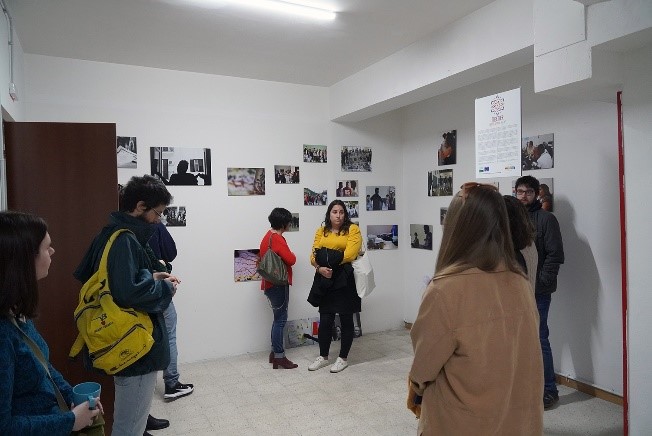
Our first session soon turned to more serious work, with each partner presenting an overview of their various institutions and the work that they performed. Our presentation providing and overview of Coventry University and the disruptive thinking about education which occurs within the DMLL. The presentations were quickly followed by discussions about the Escape Racism logo, with two options being presented and discussed. With a winning logo selected, talk turned to the materials which would be included within the project. This saw project partners scribbling ideas onto the walls of the office and making connections between them before determining the materials that would be utilised and distributing the workload amongst the team.

After lunch, the serious business of creating escape rooms began, with the team playing a few games created and presented by our partners from Associazione Eufemia. These were great fun and gave each of the team a basic understanding of the principles which go to make a great escape room experience. With our gaming session over, the day was rounded off with discussions about the project agreement, the work to be completed, and financial matters. The team then disbanded back to their respective accommodation for a short break before meeting up later that night for an evening meal.
The following morning saw everyone back at the CEIPES building to continue our discussions about the project, the project agreement, and materials to be created. This was interrupted by lunch at the typically Sicilian restaurant Casa del Brodo dal Dottore, or Doctor Broth. At the close of the second day, much had been discussed and agreed, making the meeting a great success. Each of the partner attendees had formed new friendships with each other.

Prior to our flight home, we had some time to explore the city of Palermo for ourselves. Starting at a marina and small bean local to our hotel, we walked into the city via the Quattro Canti, Four Corners, district before discovering Palermo Cathedral. Heading inside, we found some peaceful respite from the bustling streets and sat taking in the sights of saintly statues and holy relics whilst peacefully contemplating life. After this, we spent some time photographing parakeets flying freely through a small area of parkland and ate an evening meal in a small side street restaurant whose owner showered us with free samples of his food.
The
subsequent journey home was thankfully uneventful, and we arrived back
in the UK just after midnight feeling tired but happy that our kick-off
meeting had been a great success. The Escape Racism project and
partners have since created a raft of materials including a 150-page
theoretical handbook and pamphlets for dissemination. We have also
completed training sessions related to the design of escape rooms and
begun to create our own project-based games.
We’re pleased to see Homeless Monopoly (a project developed here in the DMLL – in partnership with the University of Warwick, Coventry Cyrenians and Coventry City Council) get included in an article on the BBC news website.
Our former Research Associate Jackie Calderwood and her project partner Nadine Holdsworth (University of Warwick) developed this playful learning resource to help students and adults explore the causes and solutions to homelessness and rough sleeping in our community.
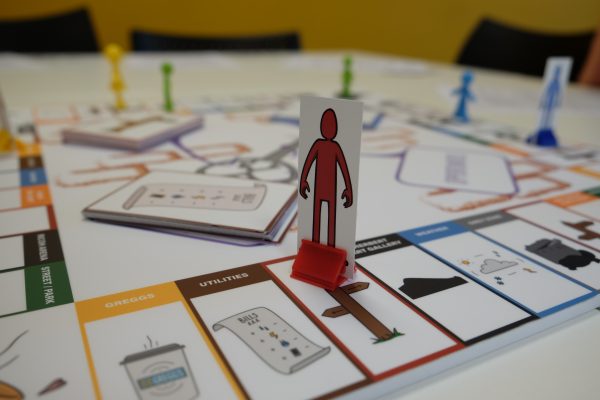

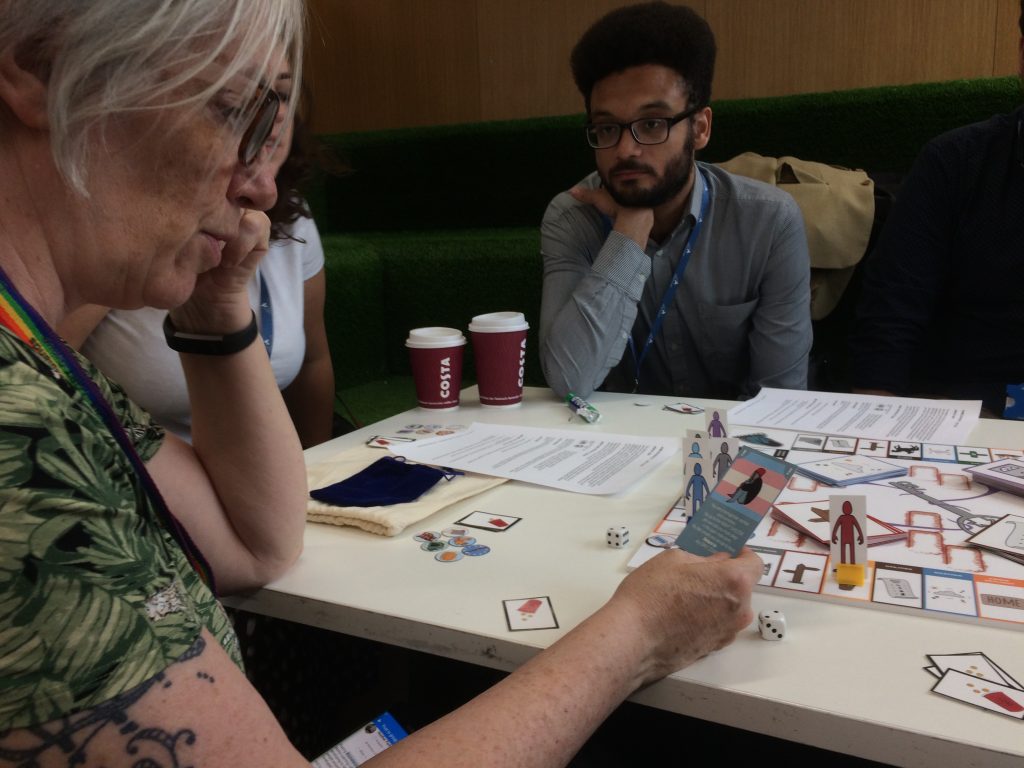
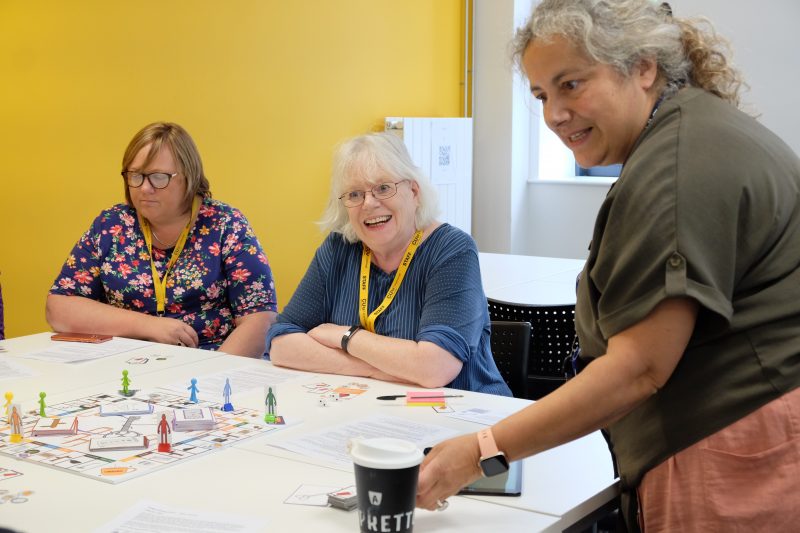
We’ve been proud to be a part of this project and hope it continues to have an impact on the pressing issue of homelessness in 21st century Britain.
You can read the post on the BBC news website here:
https://www.bbc.co.uk/news/uk-england-coventry-warwickshire-54386303
Coventry.Domains Workshop – October 14 2020
Are you interested in publishing a blog, portfolio, research project website or something else online? What about using web publishing as a teaching tool in your next module?
With Coventry.Domains, staff and students of the Coventry University Group can create any number of websites and host them online for free. This means they can work on a personal portfolio throughout their education while, at the same time, build a blog for a particular module assessment.

It’s easy to use, doesn’t require maintenance, and users can choose whether they want to show their sites to only those with a password or with everyone on the web.
What’s covered at the workshop?
We’ll go over the new Coventry.Domains WordPress service, which is a quick and easy way for Coventry University Group staff and students to get online. We’ll look at some of the following common questions about using the service including:
- Activating your account
- Adding a new website
- Creating posts and pages
- Organizing your content (categories, tags and menus)
- Changing your theme
- Extending functionality with plugins
How to Book
Booking is now open via the Professional Development Portal:
https://professionaldevelopment.coventry.ac.uk/events/view.aspx?id=3546
We’re sad to announce that we won’t be hosting Remix Play 4 this year.
As we all know, 2020 has not been business as usual. While we were originally hopeful about hosting the event in October of this year – and later wondered about moving it to a virtual space – other priorities such as helping the university to shift to remote and blended teaching have taken precedence over organising the event, and we did not want to host something that we didn’t feel would add value to the life and work of our partners and university colleagues.
We’ve therefore made the decision not host Remix Play this year. We know the event is a highlight for many of our colleagues – it certainly is for us here at the DMLL – and we’re sorry to disappoint anyone who might have been looking forward to attending the event – either in person or online.
While we haven’t yet fixed a firm date for Remix Play 4, we’re inclined to think the best time for the event is still at the beginning of the academic year, so the event is most likely to take place in the autumn of 2021 (by which time we sincerely hope we’re able to gather together in person in some form at least).
You can keep in touch with the DMLL and find out about future events here on our blog or on our Twitter feed @disrupt_learn.
We’re delighted to share the news that not one, but two of our projects have won awards in two different categories at this year’s Gamification Awards: Software and Gamification in Education and Learning. The 2020 Gamification Awards recognise excellence in many areas of gamification including software, education, healthcare, HR, marketing, and sustainability, and colleagues from the DMLL (and of course their project partners) have been recognised twice this year.
The Software Award Winner: Beaconing
Our first award was in the Software category in recognition for the Beaconing Project. Beaconing, funded by the European Commission Horizon 2020 programme, investigated gamified approaches for digitally enabling play-learn in everyday spaces that foster cross-subject learning. The project produced a tool that enables teachers to author gamified and pervasive lesson plans. This has opened up opportunities for teachers to experiment with new ways of designing and delivering their content, and to track the learning achieved beyond the formal setting of classroom teaching.
The platform is currently being accessed by more than 6000 users in school and universities across Europe.
According to Sylvester Arnab, Applied Innovation Lead here at the DMLL, the impact of the project has been to demonstrate that the priority for technology-enhanced innovation should be with the teachers on the frontline of education, inline with the UNESCO emphasis on the need of high-quality teachers in high-quality education. Working with teachers has been vital in discovering the differing use cases for learners. Additionally, the team found that there was huge interest and engagement from primary, secondary, further and higher education learners using the platform.
Here is what the judges had to say about Beaconing:
This project I love because it has a purpose. Teaching content has not changed in ages. Kids take it for granted what they are learning and how they are being taught. Adding gamification in such a clever way to change education being taught in schools is exemplary.
Mac Karlekar
Creating an ecosystem that can be used all around the world , with a variety of game elements that is customisable with add-ons that teachers can use, edit & scale-able is brilliant. Gamtastically Created!!
Sandra Abadir
An exceptional project that has resulted in a valuable platform for educators.
Margio Raftopoulos
“The current plan” for Beaconing, explains Sylvester, “is to repackage the software based on our business model, and create a marketplace for new contents to be delivered, purchased and downloaded. The business model is exploiting the modularity of the platform that will allow third parties to provide new resources such as meta game plot narratives and also the mini-games. We are currently in the process of setting up a start up to focus on this business model.”
The Gamification in Education Winner: GameChangers
Our other award was in the Gamification in Education and Learning category in recognition for the GameChangers project. GameChangers focuses on the design and implementation of playful learning experiences in everyday academic contexts. It’s offered as an open design course as well as a community for innovative educators all over the world. GameChangers has also recently received recognition from the UKRI Global Challenge Research Fund to investigate the impact of playful and gameful pedagogy in transformative education towards the development of social resilience in South East Asia.
Educators in remote communities in Malaysia have been able to use the GameChangers course material to co-create playful learning experiences suitable to their own context, and the game-based learning approach continues to have an impact today.
Here’s what some of the judges had to say about Game Changers:
Every aspect of the creative process and design has been so well thought through that it is impossible not to rate it 10/10.
Andrzej Marczews
Your approach to leverage the impact you are making by preparing tools for teachers to gamify their classes is impressive! I love the variety and diversity.
Arkadiusz Siechowicz
Great initiative, great execution, great design, looks like this project is well mastered and brings to tangible results.
Dominique Mangiatordi
In response, Sylvester (who was also the coordinator of the Game Changers Project) said “It is such an honour to have received this validation from esteemed judges who are active practitioners of gamification in various sectors. The recognition of the impact of GameChangers in education and learning on an international level will open up opportunities for exposure to our pedagogies, methodologies, outcomes and impact that could lead to further adoption and adaptation.”
In closing
We’re thankful to our staff, project partners and many others who have made success in these two awards possible.
If you’d like to know about either of these projects or anything else we’re working on here at Disruptive Media Learning Lab, we’d love to get in touch.
Just email dmll@coventry.ac.uk
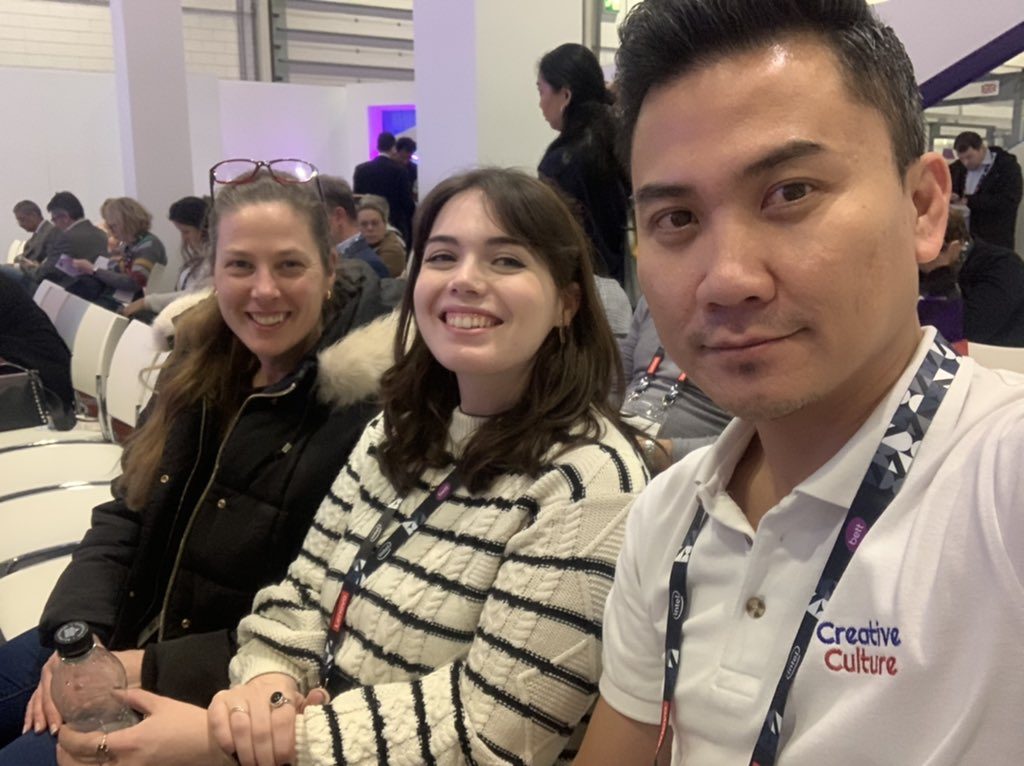
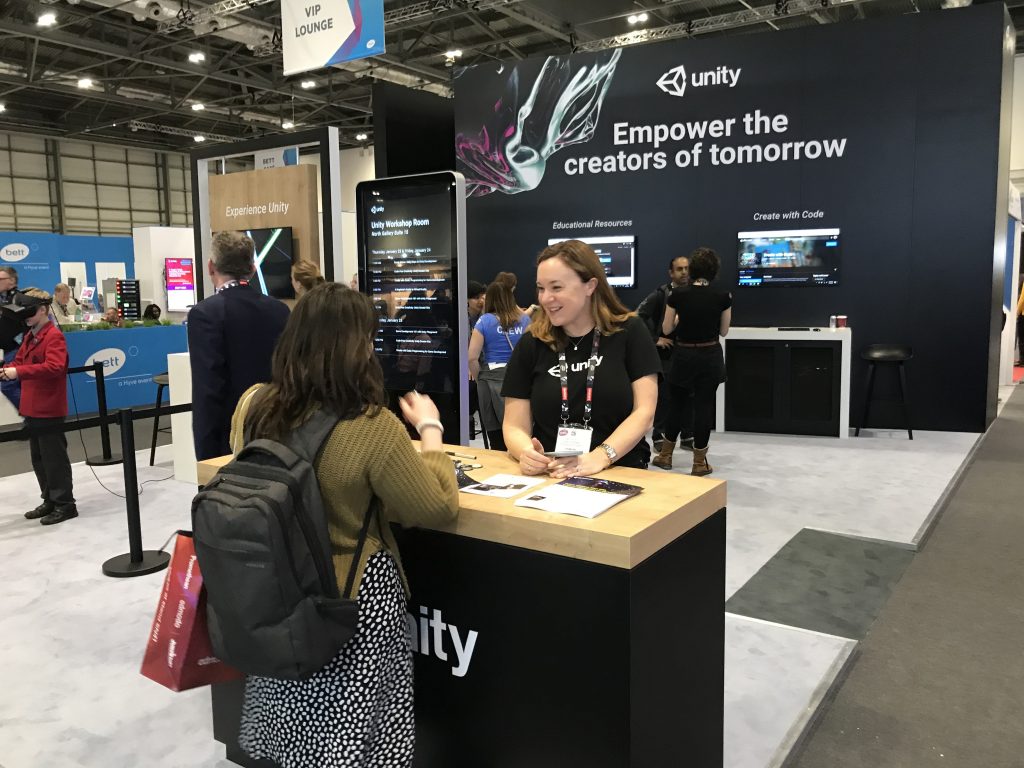
On Thursday 23rd and Friday 24th January, the Disruptive Media Learning Lab attended this year’s BETT 2020 conference at the ExCel London to promote the award-winning project, Beaconing, whilst seizing the opportunity to network and test out the latest innovative toolkits and programmes available in the Education sector. Jonathan Shaw, Sylvester Arnab, Jayne Beaufoy and Sarah Kernaghan-Andrews were those who attended to play, experiment and actively engage in workshops, talks and stalls hosted by the world-leading education technology conference.
Thursday
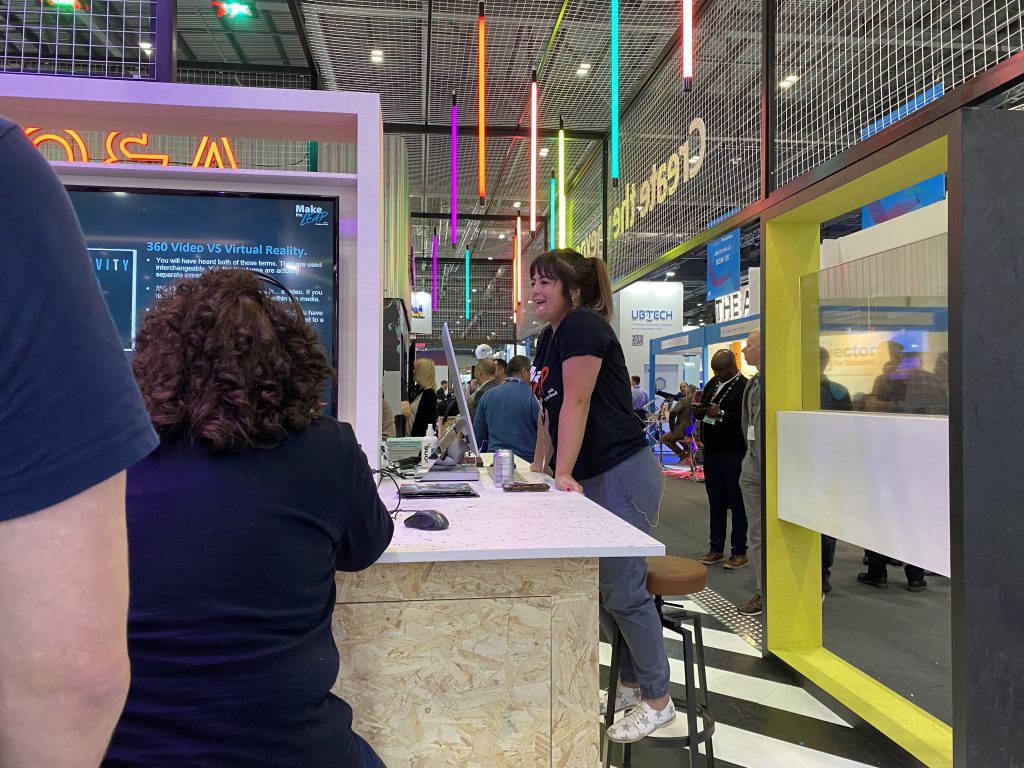
The first day consisted of us familiarising ourselves with the environment around us and booking onto activities and tutorials for the following day.
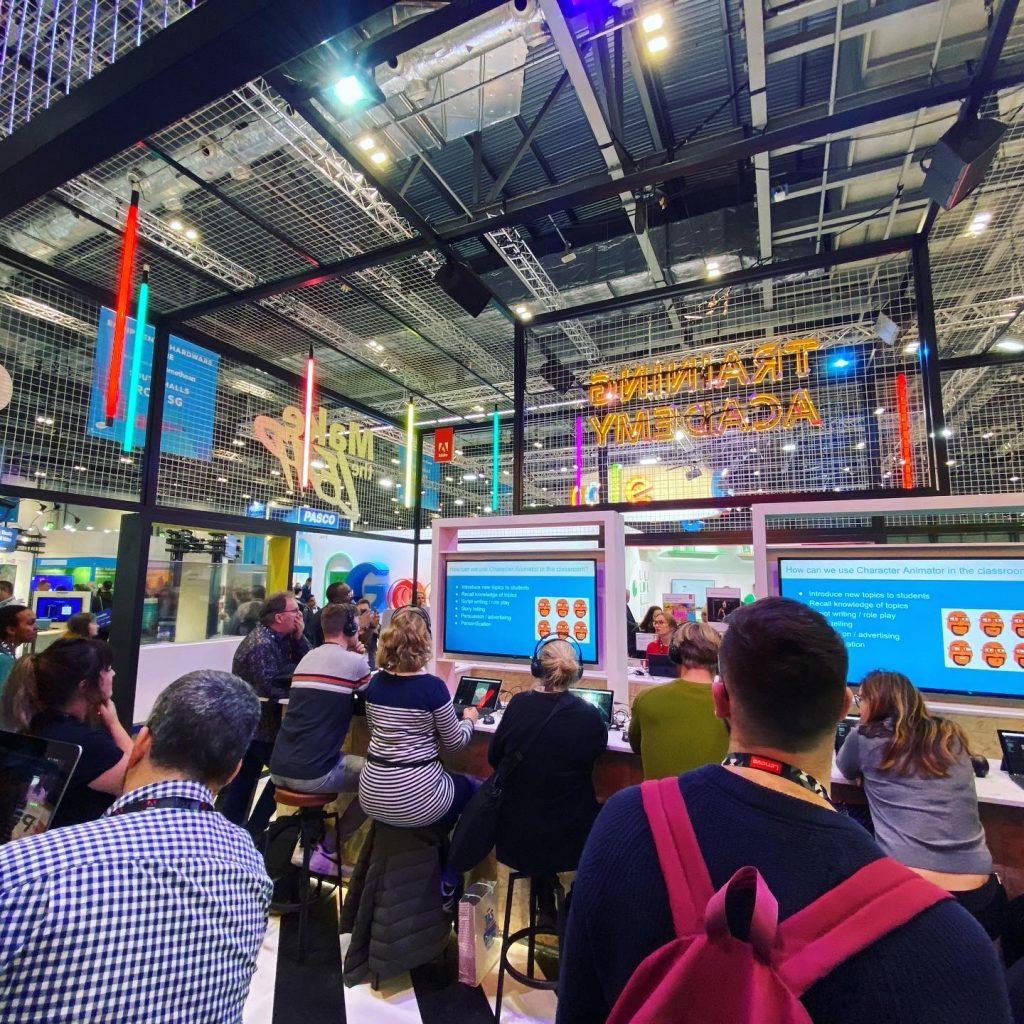
One of the popular attentions the DMLL found was Adobe’s Training Academy, where they demonstrated a range of applications from their Creative Cloud suite in the Equipment and Software exhibition. A variety of Adobe Education Leaders from diverse working backgrounds in the education sector led 20-minute instructional sessions every half an hour, for anyone wanting to improve their creative skills for teaching purposes or develop on professional practices. Some applications demonstrated were editing 360° videos with Adobe Premiere Pro, run by Beck Stewart, Coventry University, animating digital replicas of ourselves in Adobe Character Animator; as well as refining and polishing presentation designs in Adobe Sparks. There, the Education Leaders gave its participants an insightful look into some of the much-loved applications Adobe provides the creative and teaching & learning communities with. They also showed off new and alternative ways to create resources which may have never been practised by an individual before.
If you’re interested in being a part of the Adobe Education Leaders programme, you can apply to join the community at edex.adobe.com/education-leader.
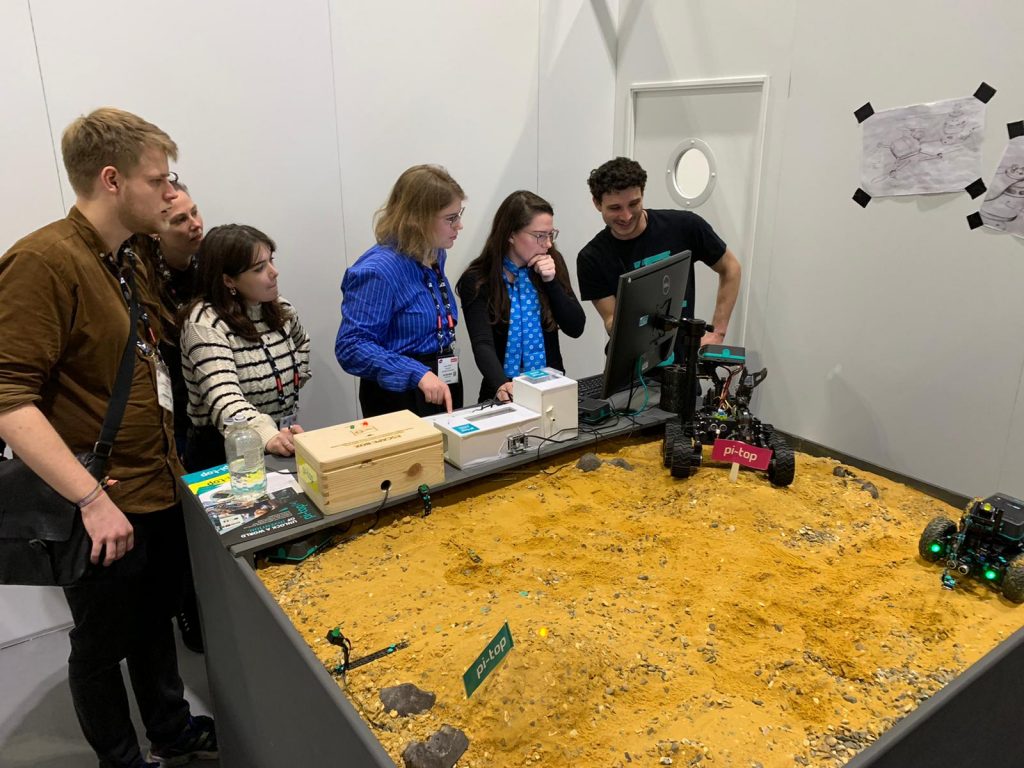
With the DMLL being prolific in its contribution towards gamification over the years and recently having Game Changers won the Gamification Award in Education and Learning category, the team are always finding new ways to adapt innovative tools and programmes to improve teaching and learning practices on an international scale.
During the event, the team came across an escape room implemented within the north exhibition hall; so it was only natural for them to check it out and solve numerous puzzles and riddles(!) After escaping from two of the three rooms, the team made their way to the final room which consisted of a Raspberry Pi operated Martian motor robot and a visual coding programme known as Scratch. Both tools had to be used in order to retrieve electric components to break a series of locks and prevent Mars from blowing up… and of course for the team to escape the room in good time.
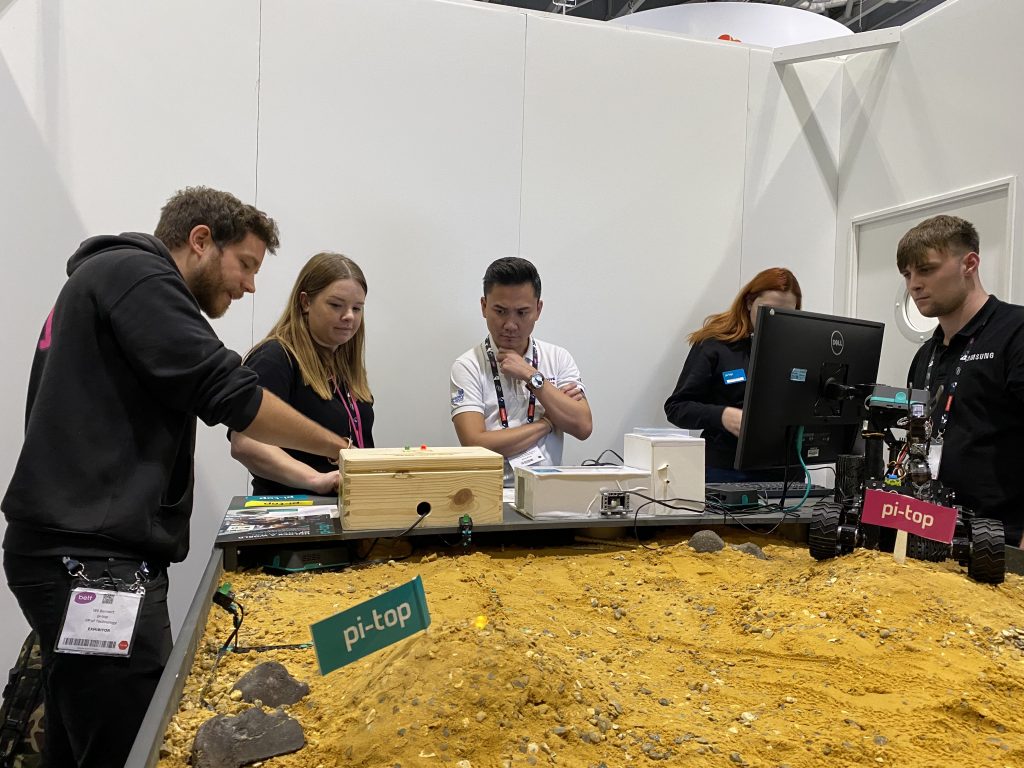
With a total of 8 minutes and 17 seconds, the team escaped the room and almost had the quickest time (almost)! Due to similarities between DMLL’s previous initiatives such as Beyond Flipped’s Mega Project: Mars Colony, and the technology demonstrated the BETT escape room; the Lab got chatting with the pi-top team, the facilitators of the last escape room. The Raspberry Pi motor introduced to participants in the third room was operated by pi-top [4], a programmable computing device which allows educators and students to create any project imaginable; from coding with Lego® to building computers. Foundation components are also available with the pi-top [4] to allow coders and makers to create an assignment set by their educator; or whatever they desire to build. Being able to integrate this into a teaching and learning environment would allow HE students access into real-life careers that require coding and programming knowledge, regardless if they’re proficient or not. Incorporate it all into an escape room setting as pi-top did and you have the ultimate team building and creative problem-solving activity possible in a learning space.
Friday
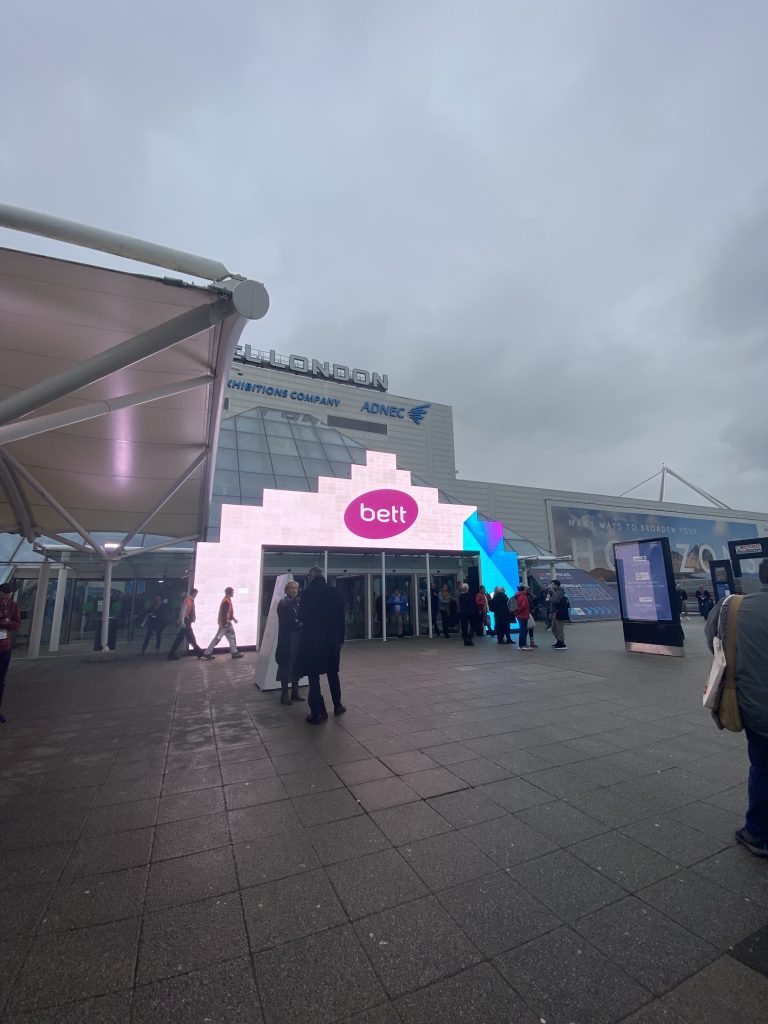
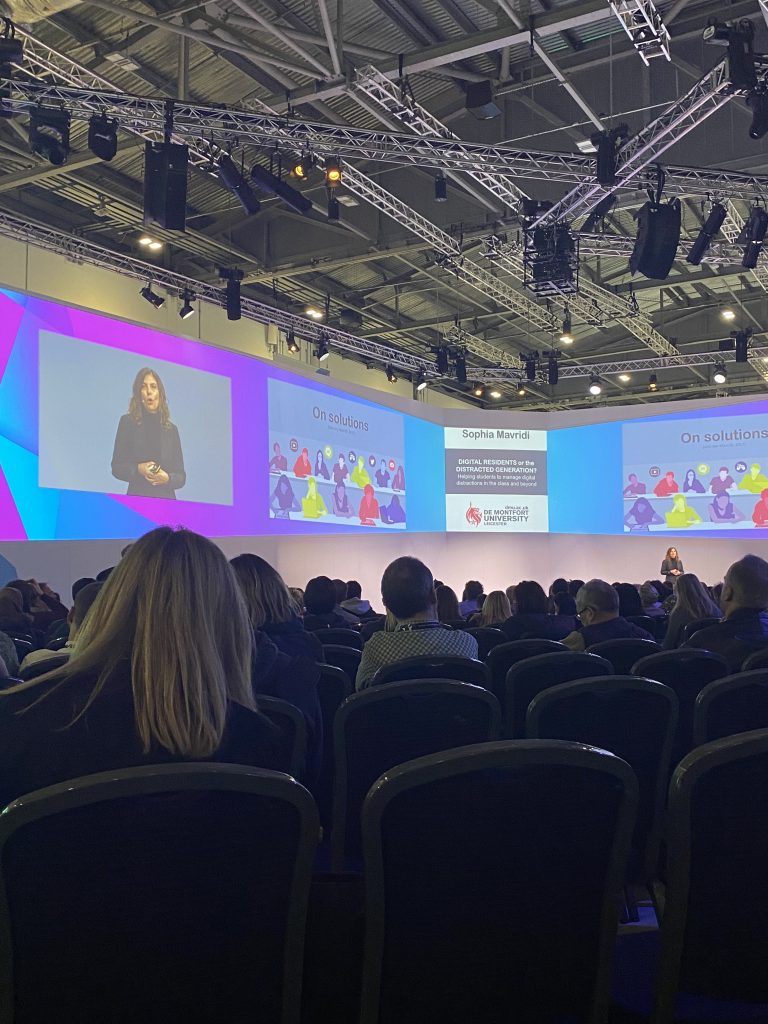
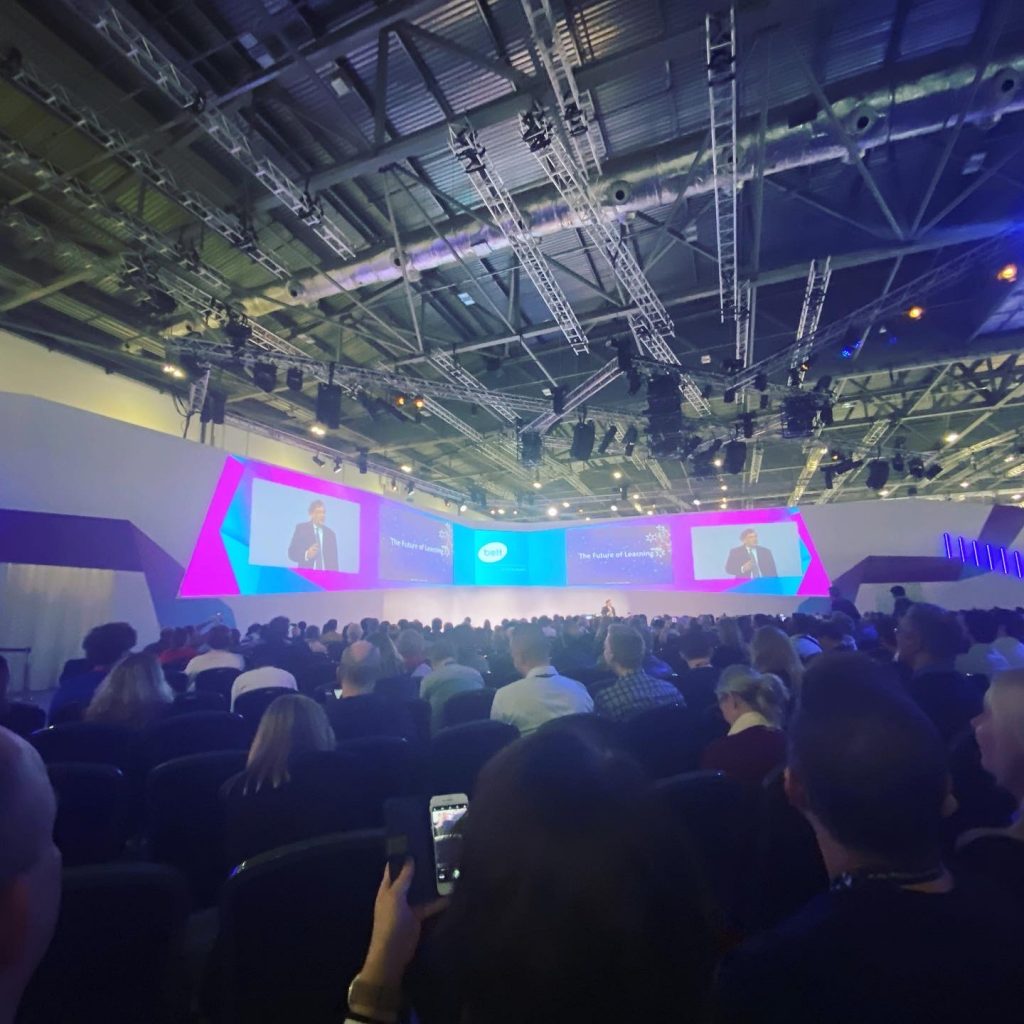
As Friday approached, a variety of talks and workshops were attended to cater to each person’s agenda, area of speciality and interests. A couple of keynotes that were attended within the BETT Arena were speakers Sophia Mavridi, Lecturer at De Montfort University, and Sugata Mitra, former Professor in Educational Technology at Newcastle University.
Sophia Mavridi’s keynote, ‘Digital Residents of the Distracted Generation? Helping Students to Manage Digital Distractions in the Classroom and Beyond’; focused on helping students manage digital distractions as a skill, whilst arguing for technology‘s revolutionary impact on teaching and learning. The Education sector across the world have taken drastic action to ban the use of mobile phones in the classroom, which did see an average of 6.4% increase in standardised tests in low-performing students in 2015; although, the findings did not discount that the use of mobile phones could be used as a learning tool if their use is properly structured. This research was found in ‘Ill Communication: Technology, Distraction & Student Performance’, Beland and Murphy, 2015.
Mavridi argued how the use of technology in the learning environment needs to be incorporated into the digital literacy framework to develop 21st Century skills further. She went into solutions and techniques based on her own research to allow teachers and students to experiment with the management of their digital distractions in a classroom. Debunking the myth ‘multitasking’, allowing devices in the classroom to teach procedures, promoting self-regulation techniques and applying the ‘Pomodoro technique’ were some examples of solutions Mavridi highlighted in her talk as being most effective when teaching 21st Century students’ boundaries of digital devices. She concluded that the banning and removal of devices would not improve a student’s ability to focus and manage digital technology in the long run, however, allowing education with such technology would empower people to manage digital distractions and function in highly complex environments.
Sugata Mitra, a world-renowned TED award winner and keynote speaker, presented his work from the last 2 decades across the globe with his Hole in the Wall (HiW) project. HiW was an experiment conducted by Mitra himself in the 90s; he first installed a computer in a wall within the slums of Kalkaji, Delhi, for children of the local area to freely use and learn how to interact with the Internet under no supervision. Mitra found that children quickly adapted to the technology and started learning independently, this begun a new educational program known as ‘self-organised learning environments’ (SOLE).
Sometime after this initiative, ‘The School in the Cloud’ was developed and launched in seven labs across the world after winning the $1m TED Prize award in 2013. This was to create Mitra’s vision of providing an environment where a global community of educators could host their own SOLE and observe the impact that self-organised learning has on children, which he discovered improved their comprehension, communication and computing skills.
Mitra explained how pedagogy has become most effective since the Internet, and with the support of self-organising systems and spontaneous space being available to educators and children, this would allow them to seek to solve problems and find correct answers. From his experiments, he argues that education needs a new assessment system to embed the ability to learn and find accurate and current answers, stating that the Internet and collaboration must be allowed during assessments.
Overall
Across the two days, there was several innovative teaching and learning tools, methodologies, and solutions to consider for the future. BETT 2020 hosted and showcased tools originally designed for schools that can easily be adapted and made intuitive for any undergraduate or postgraduate student; whether it’s purely digital, blended or more practical based. It was insightful to see and hear a vast range of experiences and theories on bettering someone’s mental and practical development and knowledge; each speaker and company there had the same idea to break away from old, traditional classrooms for good and empower everyone with technology so they are able to transform and teach future generations.
Today, DMLL staff met with representatives from Coventry City of Culture Trust, Coventry City Council, Warwick University and Coventry University to discuss how Open Badges could break through our own institutional walls and play a part in the lives of our local community members during City of Culture 2021 and beyond.
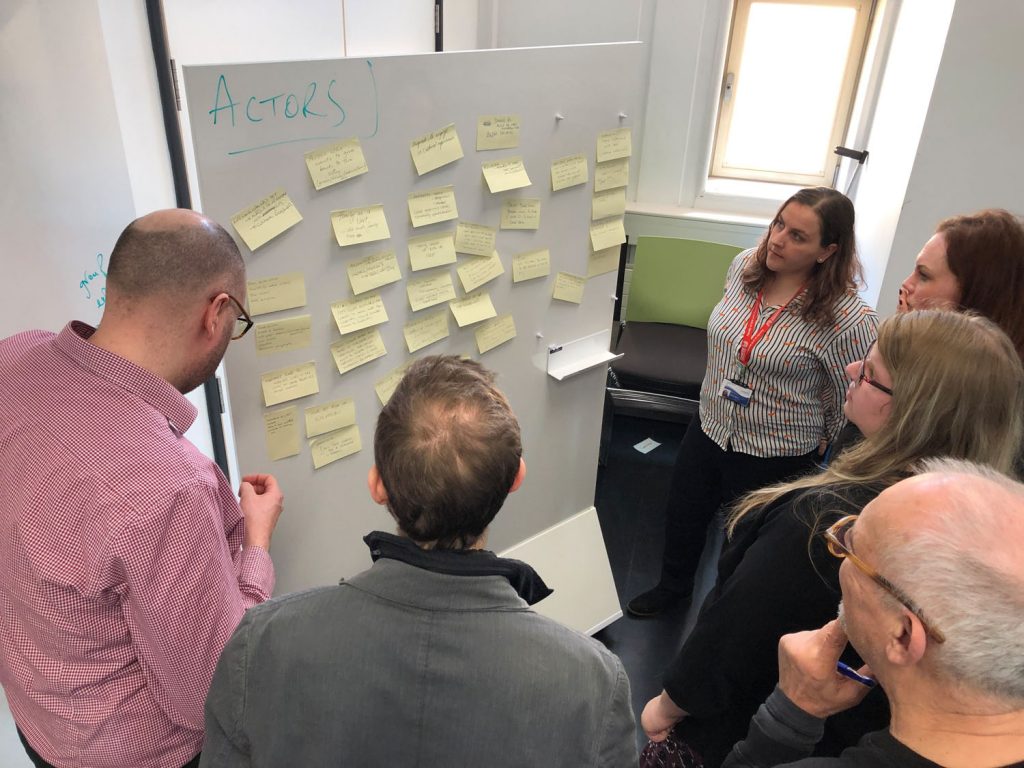
Meeting in the DMLL Teaching Room over coffee, cookies and plenty of post-it notes, representatives from these different institutions heard some background on open badges before being let loose to collaborate and dream what badges might look like in the city of Coventry.
Open Badges
Small charities, large companies, higher education institutions and many other organisations are able to use Open Badges to recognise work done by members or stakeholders of their communities. A badge can be given for anything from attending a workshop to volunteering hundreds of hours and more. They can also be incorporated into gamified experiences of learning- encouraging people to reach higher goals and engage in new experiences.
In a knowledge economy, Open Badges offer increasing opportunities for people to demonstrate their talent, commitment and willingness to try new things outside of formal education.
Open Badging has been around for several years now, and the DMLL have run a number of small scale pilots to explore what that might look like in our own higher education context; we suspect badges could have a strong impact in our city community as well.
The Meeting
After hearing about some great community-based badging initiatives like the Chicago City of Learning and the Cambridgeshire Culture Card programmes, our guests from the City Council, City of Culture trust and Warwick University were let loose to develop some personas – both of people who would be earning badges as well as organisations who would want to award them.
The ensuing mad sea of yellow rectangles was a thing to behold.
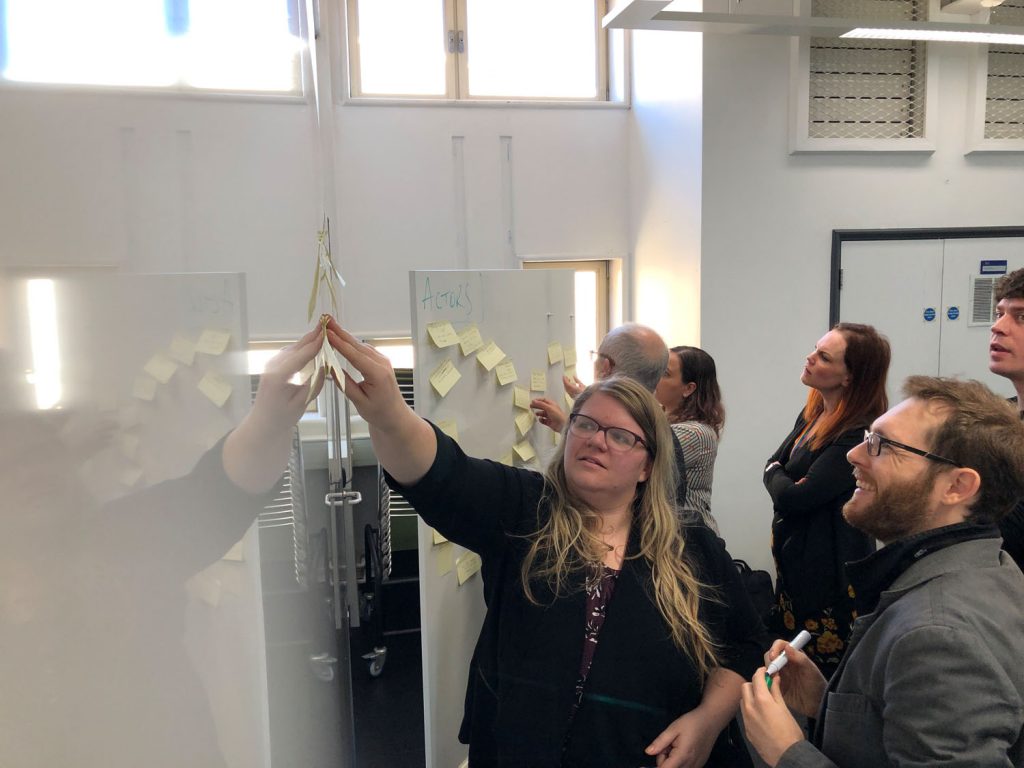
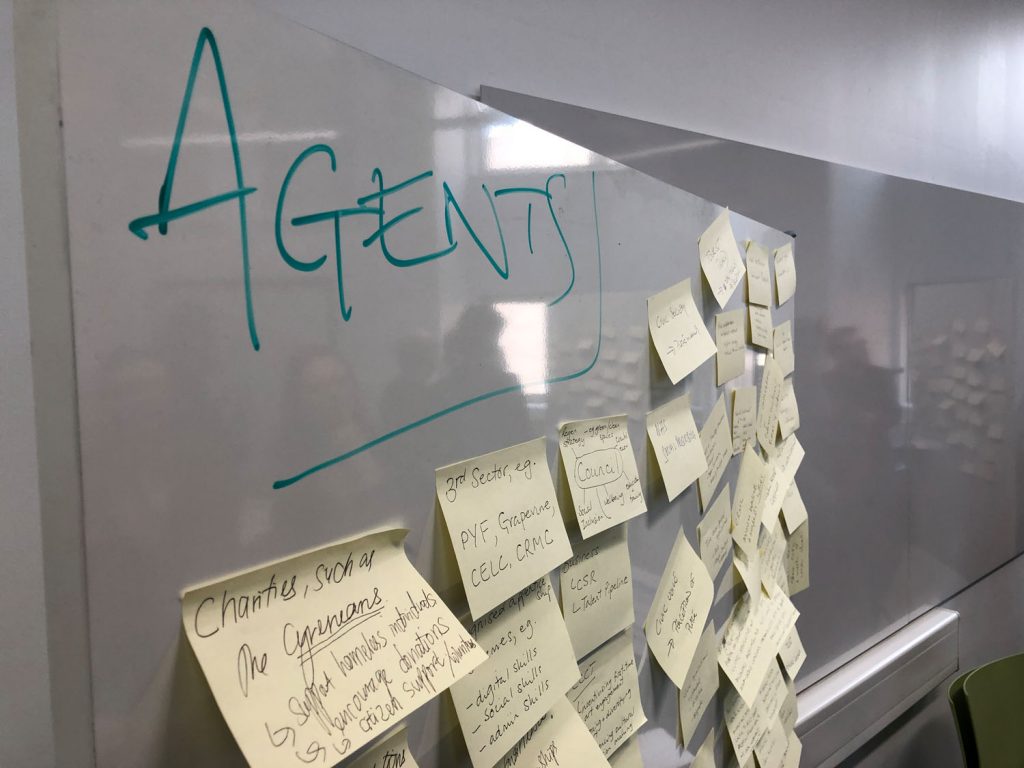
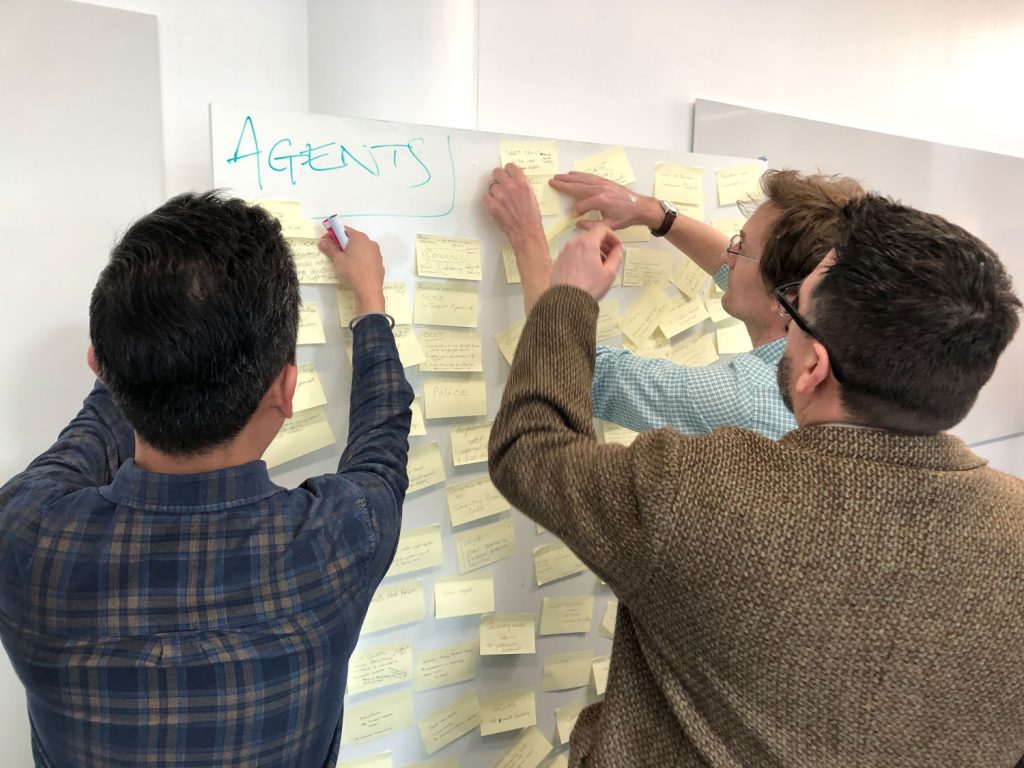
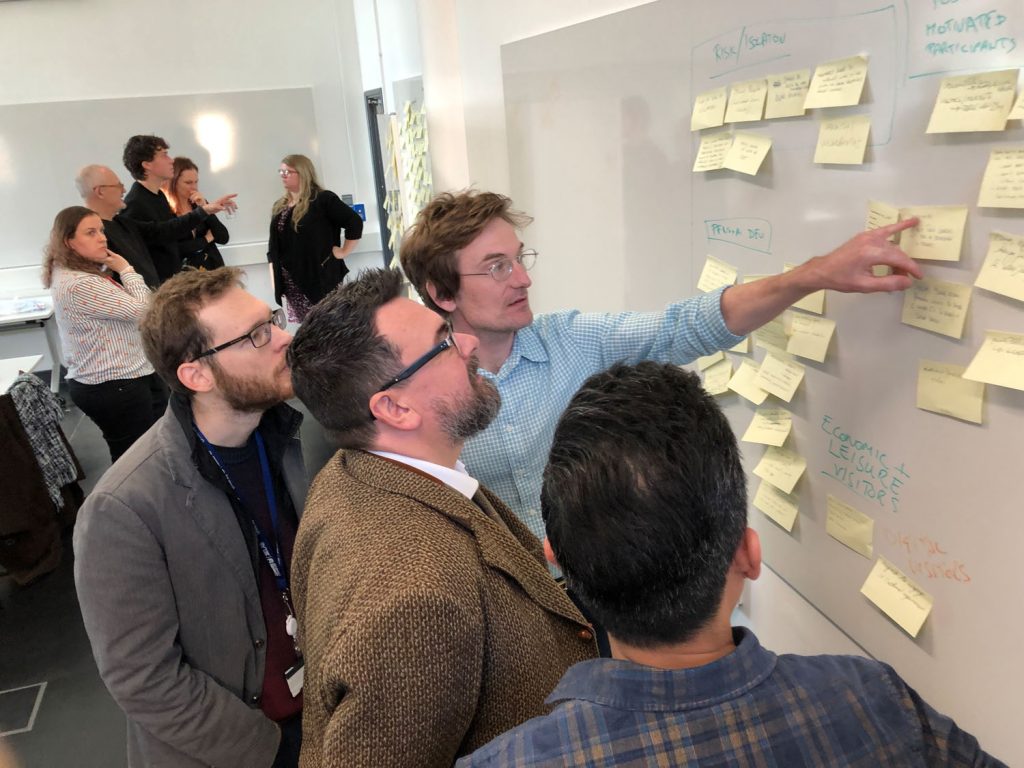
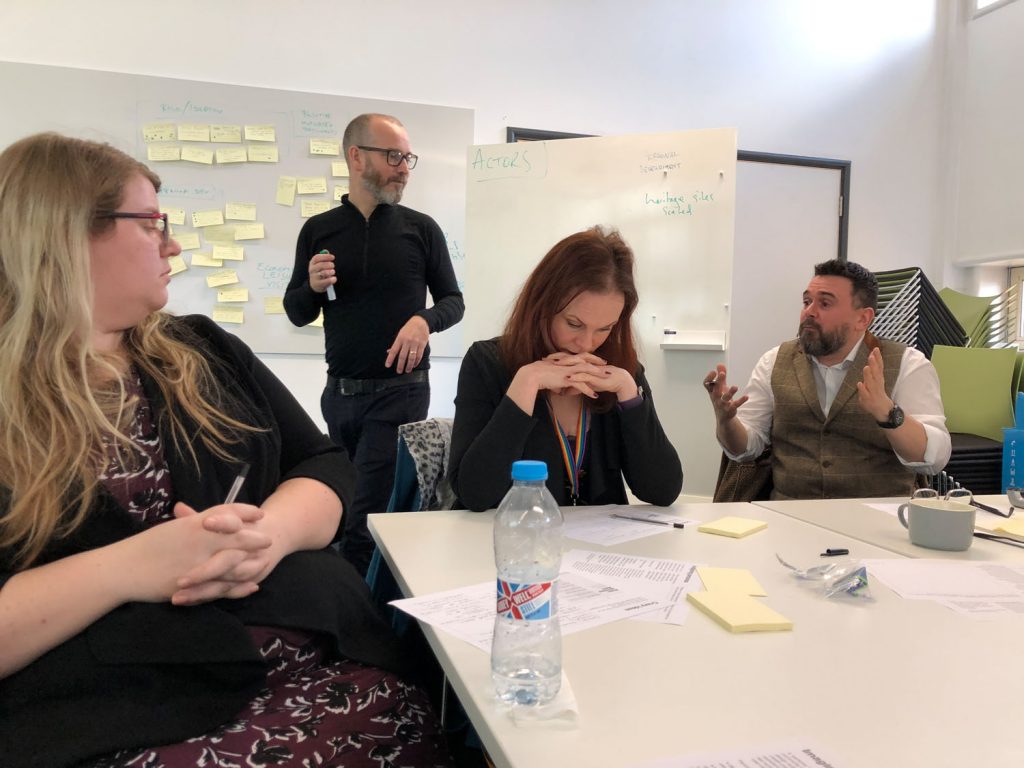
Leading the meeting, Jonathan Shaw, Director of the DMLL, invited the participants to reflect on the different potential users and issuers of badges, see what they have in common and reflect on what other people in the room were discussing. Of course work would need to be done with the final users of digital badges to ensure their voices help shape the process, but it was useful to begin to explore how open badging could play a role in the community.
Jonathan then asked the group to quickly come up with their own ideas for specific badges… who would award them? What might they be awarded for? Again, more work will need to be done to identify those badges which would have the biggest beneficial impact for our city, but as we thought of some specific ones, it became clear that there was a lot of potential.
The aim of the session was to explore the potential for badges in Coventry and to identify any next steps for the group. On the whole, the participants voiced support for the idea, so the conversation turned to next steps, which involve identifying key people to speak to, the creation a business plan and a formal proposal for the project.
Our thanks
This meeting was a long time in the making, and we are so thankful to all those who took the time out of their tight schedules to explore the potential of digital badges in our community.
We’re so excited to see how this will take shape over the coming weeks and hopefully be a big part of the City of Culture 2021 and beyond.
It’s early days yet, but if you’d like to get in touch with us about Open Badges you can email dmll@coventry.ac.uk


